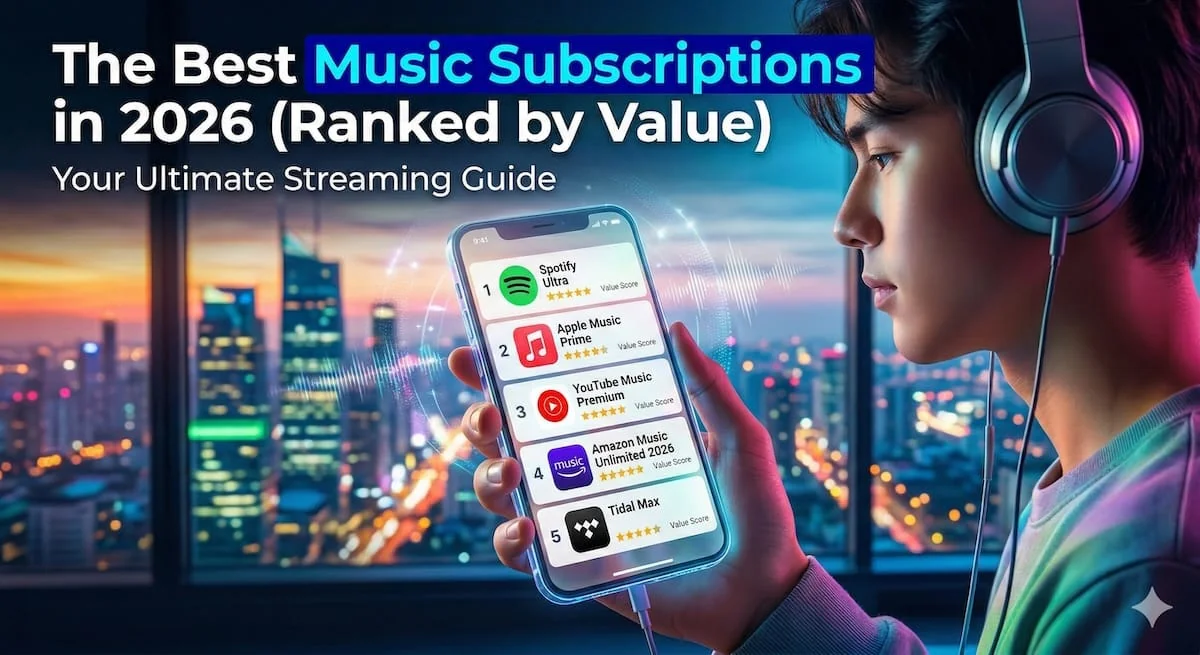
Die besten Musikabonnements in 2026 (nach Wert bewertet)
Quick Summary
Spotify bietet das beste Gesamtpaket (Discovery, Podcasts, Preis). Apple Music ist besser, wenn du bereits bei Apple bist (nahtlose Integration, hohe Qualität). Deezer siegt bei Audioqualität (HiFi FLAC). Tidal ist für Künstler-Unterstützung und Lossless. Qobuz für Audiophile. SoundCloud Go für Podcaster und Underground-Musik. Nutze unser Preisvergleichs-Tool, um zu sehen, welcher in deinem Land am günstigsten ist.
2026 ist es nicht mehr reif, einfach Spotify zu wählen und zu gehen. Der Musikstreamingmarkt ist jetzt vielfältig genug, dass du wirklich verschiedene Services auf deine Bedürfnisse bewerten solltest. Vielleicht kümmert dich die Audioqualität nicht – in diesem Fall ist Spotify noch das beste. Aber wenn du ein Apple-Nutzer bist, kannst du mit Apple Music besser fahren. Wenn du Lossless-Audio brauchst, kann Tidal oder Qobuz das Geld wert sein. Wenn du Künstler-Royalties kümmern, hat Tidal eine Struktur, die besser für Creator verdient.
| Service | Am besten für | Why people pick it |
|---|---|---|
| Spotify | All-around | Best discovery algorithms, widest device support, podcasts included |
| YouTube Premium | YouTube-heavy users | Ad-free YouTube + background play + full YouTube Music access |
| YouTube Music | Google ecosystem | Music-focused option, included free with Premium |
| Apple Music | Apple devices | Deep integration with iPhone, HomePod, Apple Watch, Siri |
| Tidal | Hi-fi mainstream | Lossless and Dolby Atmos across a mainstream catalog |
| Deezer | Underrated alternative | Strong catalog, Flow AI discovery, available in 180+ countries |
| Qobuz | Audiophiles | Studio-quality hi-res purchases and streaming |
| SoundCloud Go | Indie & underground | Largest independent artist catalog, remix culture |
Rangliste nach Kategorie
Das ist etwas, das die meisten Menschen nicht bedenken, bis sie die Zahlen sehen. Genau der gleiche Spotify Premium-Plan kann 1,58 $/Monat in einem Land und 10,99 $/Monat in einem anderen kosten. Gleicher Katalog, gleiche Funktionen – nur eine andere Preisgestaltung basierend darauf, wo Sie sich anmelden.
Spotify ist immer noch der Platz zum anfangen. Der Musikdienst ist absurd poliert, die Entdeckungsfunktionen (Discover Weekly, AI DJ) sind großartig, das Katalog ist massiv, und die Preise sind wettbewerbsfähig. Es lohnt sich, die anderen zu überprüfen, aber es ist schwer, gegen Spotify zu argumentieren, wenn du nicht spezialistische Bedürfnisse hast.
Die beste Version: Premium auf $12,99/Monat, auch erhältlich mit Hulu und Max in einem Bundle.
Apple Music: Besser, wenn du tief in das Apple-Ökosystem bist
Apple Music ist manchmal das Schwarzschaf von Musikdiensten, aber es verdient einen zweiten Blick, besonders wenn du einen Mac, iPhone, iPad, Apple Watch oder HomePod besitzt. Die native Integration ist einfach besser – du kannst von deinem Auto aus eine Song starten, wechsele zu deinem iPhone, und es nimmt von wo du es verlassen hast auf.
Der Sound ist auch besser als Spotify, wenn du Lossless und Dolby Atmos Music hörst (obwohl fast niemand es tut). Der Katalog ist ähnlich groß wie Spotify und die Künstler-Royalty-Struktur ist besser. Die Entdeckungsfunktionen sind schächer als Spotify, und die UI ist weniger poliert, aber mit, wenn du bereits tief in Apple bist.
Der kostenlose Plan ist wirklich brauchbar, wenn man Anzeigen tolerieren kann, was eine gute Möglichkeit ist, um auszuprobieren, bevor man sich verpflichtet. Auf der bezahlten Seite hat Spotify Ende 2024 endlich verlustfreie Audio nach Jahren des Versprechens eingeführt, so dass die Soundqualitätslücke mit Tidal erheblich geschlossen wurde. Podcasts und Audiobooks sind in die gleiche App integriert, was je nachdem, wie man sich über Podcast-Empfehlungen in der Startseite fühlt, entweder praktisch oder lästig ist.
Der größte Kritikpunkt an Spotify ist, dass es Künstler schlecht bezahlt — die niedrigste Pro-Stream-Rate jeder großen Plattform. Wenn es dir wichtig ist, Musiker direkt zu unterstützen, ist das wissenswert. Aber für reine Hörer-Werte ist es schwer, gegen Spotify zu argumentieren.

Spotify
184 countries compared

Cheapest
Nigeria
$1.16/mo

Most expensive
Liechtenstein
$19.73/mo
Aber wenn Audioqualität, für dich zählt, verdient Deezer dein Aufmerksamkeit. Das HiFi-Tier ist einige billigsten Wege, um wirklich Lossless-Musik zu hören.
Dies ist das Abonnement, das ich den meisten Menschen empfehle, die mir sagen, dass sie jeden Tag YouTube ansehen. Der Pitch ist einfach: Sie zahlen für werbefreie YouTube (was allein Ihnen Stunden Ihres Lebens pro Monat spart), Hintergrundwiedergabe auf Mobilgeräten, und Sie erhalten YouTube Music kostenlos dazu. Für viele Menschen würde dies die Notwendigkeit einer separaten Musikabonnement völlig eliminieren.
YouTube Music selbst ist anständig — nicht spektakulär. Der Katalog ist riesig, da er offizielle Veröffentlichungen plus das gesamte YouTube-Ökosystem von Live-Auftritten, Remixes, Covers und Fan-Uploads enthält, die Sie nirgendwo sonst finden. Die Empfehlungen werden besser, liegen aber immer noch hinter Spotifys zurück. Wo es interessant wird, ist die regionale Preisgestaltung: YouTube Premium ist in über 110 Ländern erhältlich, mit einigen der größten Preisspannen, die ich verfolgt habe. In einigen Märkten zahlen Sie einen Bruchteil dessen, was es in den USA oder Europa kostet.
Tidal hat a großen Gimmick: Es zahlt Künstler besser als jeder andere Service, und es ist transparent darüber. Es hat auch Lossless-Audio auf Standard-Plänen (nicht extra), Dolby Atmos Music, und ein starker Musikmagazin Inhalte.

YouTube Premium
111 countries compared

Cheapest
India
$0.93/mo

Most expensive
United Kingdom
$10.69/mo
Die beste Version: Premium (Lossless inklusive) auf $11,99/Monat, oder HiFi auf $19,99/Monat.
YouTube Music verdient seinen eigenen Platz auf dieser Liste, weil es ein spezifisches Problem löst: Sie mögen YouTube-Musik-Katalog — einschließlich der Live-Auftritte, Cover und Remixes, die keine andere Plattform hat — aber Sie sehen nicht genug YouTube-Videos, um für die vollständige Premium-Abonnement zu rechtfertigen.
Qobuz ist absurd spezialisiert. Es ist den Musikdienst für Leute, die echte Hi-Res Lossless Audio lieben und bereit sind, dafür zu zahlen. Die Benutzeroberfläche ist grundlegend, aber es gibt nicht wirkliche Discovery-Features außer Empfehlungen und Kurationen.
Dies ist ein Service, den du wählst, wenn du ein echtes Audio-Audiophile bist und bereit bist, weniger polieren Interface für höchste Klangqualität zu ertragen.
Die Nachteile sind jedoch real. Der Empfehlungsalgorithmus ist deutlich schwächer als der von Spotify — er neigt dazu, Sie zu dem zurückzuschleifen, was Sie bereits gehört haben, anstatt Sie zu neuen Künstlern zu drängen. Die App-Schnittstelle kann sich überflüssig anfühlen, Musikvideos mit Audio-Only-Tracks auf Weise vermischen, die manchmal verwirrend sind. Und es gibt praktisch keine sozialen Funktionen — keine gemeinsamen Playlists, keine gemeinsamen Hörsessions, kein Äquivalent zu Spotify Wrapped.
Mein Fazit: Wenn Sie bereits YouTube Premium zahlen, bekommen Sie YouTube Music kostenlos dazu — es gibt keinen Grund, es separat zu berücksichtigen. Aber wenn Sie sich nicht um werbefreies YouTube-Video kümmern und nur eine Musik-App mit dem tiefsten Katalog von Live- und inoffiziellen Inhalten mögen, ist YouTube Music standalone eine zwingende Wahl zu einem fairen Preis. Es ist in 111 Ländern erhältlich mit erheblicher regionaler Preisgestaltung Variation.

YouTube Music Premium
111 countries compared
Cheapest
Nigeria
$0.95/mo

Most expensive
Switzerland
$17.19/mo
Die beste Version: Premium auf $9,99/Monat, oder Premium Plus auf $14,99/Monat mit höherer Audio-Qualität.
Wenn în Haushalt auf Apple läuft — iPhones, iPads, Macs, HomePods, Apple Watch — dann ist Apple Music der einfachste Weg. Die Integration ist auf eine Weise nahtlos, die Drittanbieter-Apps nicht ganz erreichen können: Siri-Steuerelemente funktionieren zuverlässig, räumliches Audio mit Dolby Atmos klingt auf AirPods Pro wirklich beeindruckend, und die Apple Watch-App lässt Sie streamen, ohne Ihr Telefon in der Nähe zu haben.
YouTube Music ist offiziell besser als es war, und es hat ein großes Vorteil: Super einfache Integration mit YouTube. Wenn du YouTube Premium hast (für Video ohne Werbung), bekommst du YouTube Music automatisch. Der Katalog ist groß, die Entdeckung ist okay (basiert auf YouTube-Algorithmen), und die Preise sind wettbewerbsfähig.
Das Problem: UI ist weniger poliert, Entdeckungsfunktionen sind nicht so gut wie Spotify, und wenige Menschen ziehen Musikwahl um dafür. Aber als Bonus mit YouTube Premium ist es nicht schlecht.

Apple Music
113 countries compared
Cheapest
India
$1.25/mo

Most expensive
Kuwait
$17.75/mo
Persönliche Empfehlung: Meine Top-Choice-Rankings
Für Menschen, die eine All-Rounder-Service wollen: Spotify. Punkt. Die Entdeckung, die Benutzerfreundlichkeit, die Podcast-Integration – es ist schwer zu schlagen.
Über die Klangqualität hinaus hat sich Tidal eine stille Reputation für die Zahlung von Künstlern dafür erworben, dass es am meisten pro Stream von jeder großen Plattform zahlt. Wenn das euch ethisch wichtig ist, ist es ein echter Differentiator. Der Katalog ist mit 100+ Millionen Spuren solide, und Tidal Connect lässt Sie Audio zu kompatiblen Geräten schieben (ähnlich wie Spotify Connect). Der Empfehlungsmotor hat sich im letzten Jahr viel verbessert, aber ist immer noch nicht auf Spotifys Level.
Für Audioqualität: Deezer HiFi oder Tidal Premium (Lossless). Beide sind großartig. Wähle Deezer, wenn du das Interface mögen, Tidal, wenn du Künstler-Royalties unterstützen möchten.

Tidal
61 countries compared

Cheapest
Argentina
$0.25/mo
Most expensive
Liechtenstein
$17.25/mo
Für Underground-Musik und DJ: SoundCloud Go+. Es ist einzigartig für diese Gemeinschaft.
Deezer ist der Musikdienst, den jeder vergisst, und ich glaube wirklich, dass das unfair ist. Es hat einen Katalog von 100+ Millionen Spuren, es ist in 180+ Ländern verfügbar (mehr als Spotify), und sein Flow-Feature — ein KI-angetriebenes Personal-Radio, das deinen Geschmack lernt — ist einer der besseren Discovery-Tools, die ich benutzt habe. Es ist wie eine intelligentere Version einer Radiostation, die wirklich versteht, was du hören möchtest.
Alle diese Preise sind US-Preise. In deinem Land können sie ganz unterschiedlich sein. Nutze unser Preisvergleichs-Tool auf SubscriptionsCompare.com, um zu sehen, was jeder Service in deinem Markt kostet – manchmal kann einer 30-40% billiger sein.
Und vielleicht möchtest du nicht auf einen einzigen Service beschränken. Du kannst Spotify für tägliche Verwendung, Qobuz für echte Hi-Fi-Hörsessions. Oder Tidal, wenn du Künstler-Royalties kümmern. Es gibt Flexibilität hier – keine Vertragsverpflichtungen, keine Strafen für Wechsel.

Deezer
158 countries compared

Cheapest
Turkey
$1.28/mo
Most expensive
Switzerland
$18.49/mo
7. Qobuz – für die ernsthaften Audiofiles
Qobuz ist ein Nischendienst und weiß das. Das ist für Leute, die DACs besitzen, Meinungen über Bittiefe haben und den Unterschied zwischen 16-Bit- und 24-Bit-Audio erkennen können. Wenn das du bist, liefert Qobuz: Studio-Qualitäts-Streaming bis 24-Bit/192kHz, plus die Fähigkeit, Hi-Res-Tracks dauerhaft zu kaufen und herunterzuladen – etwas, das die meisten Streaming-Services nicht bieten.
Der Katalog ist mit etwa 100 Millionen Tracks kleiner als die großen Player, mit starkem Fokus auf klassische Musik, Jazz und Indie. Pop- und Hip-Hop-Coverage ist solide, aber du könntest gelegentlich Lücken in regionalen oder sehr Nischen-Genres finden. Die App ist funktional, aber einfach – das ist kein Service, den du wegen seines UI-Designs oder sozialer Features wählst.
Die größte Einschränkung ist die Verfügbarkeit. Qobuz operiert in etwa 20 Ländern – hauptsächlich Westeuropa, die USA und eine Handvoll anderer. Wenn es dort nicht verfügbar ist, ist Tidal HiFi die nächste Mainstream-Alternative. Und die Preisgestaltung spiegelt die Premium-Positionierung wider: es ist die teuerste Option auf dieser Liste in den meisten Märkten.

Qobuz
19 countries compared

Cheapest
Brazil
$5.02/mo

Most expensive
Denmark
$22.93/mo
8. SoundCloud Go – beste für unabhängige und Underground-Musik
SoundCloud nimmt einen einzigartigen Platz auf dieser Liste ein, weil es die einzige Plattform ist, auf der unabhängige Künstler direkt ohne Distributor hochladen können. Das bedeutet, du findest Tracks, Remixe, DJ-Sets und unveröffentlichtes Material hier, das einfach nicht auf Spotify oder Apple Music existiert. Für Fans elektronischer Musik, Hip-Hop, Lo-Fi und experimenteller Genres ist SoundCloud unersetzlich.
[PLACEHOLDER: SoundCloud Go (the paid tier) removes ad...DE]
[PLACEHOLDER: I wouldn't recommend SoundCloud as your ...DE]

SoundCloud Go
29 countries compared

Cheapest
Mexico
$3.36/mo
Most expensive
Denmark
$9.02/mo

Save on your subscription with a VPN
Regional pricing means the same subscription can cost significantly less in another country. Use CometVPN to connect to the cheapest region and sign up at the lowest price — safely and securely.
Try CometVPNHow to pick: the decision tree I actually use
After years of testing and comparing these services, I've boiled the decision down to a few honest questions:
- Schaust du jeden Tag YouTube? → Hole dir YouTube Premium. Du schließt zwei Abos mit einer Rechnung zusammen und sparst langfristig Geld.
- Höchst du nur Musik und interessierst dich nicht für werbefreie YouTube-Videos? → YouTube Music Standalone bei $10.99/Monat bietet dir den umfassendsten Katalog von Live- und inoffiziellen Inhalten zu einem wettbewerbsfähigen Preis.
- Ist dein Haushalt ganz auf Apple eingestellt (iPhones, HomePods, Apple Watch)? → Apple Music integriert sich besser als alles andere in dieses Ökosystem.
- Interessiert dich die Audio-Qualität und hast du anständige Kopfhörer oder Lautsprecher? → Tidal, wenn du ein Mainstream-Erlebnis willst, Qobuz, wenn du ein echtes Audiophil bist.
- Möchtest du die beste Discovery-Engine und die breiteste Geräteunterstützung? → Spotify. Es ist die Standardempfehlung aus gutem Grund.
- Ist Deezer auf deinem Markt billiger als Spotify? → Gib Deezer einen ernsthaften Versuch. Das Flow-Feature allein könnte dich konvertieren.
- Höchst du viel unabhängige, Underground- oder Remix-Inhalte? → Behalte SoundCloud Go als sekundäres Abonnement.
One more thing: always check regional pricing
I can't stress this enough. The same music subscription can cost 3–5x more depending on your country. I built SubscriptionsCompare specifically because I kept finding these price gaps and thought everyone should have easy access to this data. Before you sign up for anything, spend 30 seconds checking what it costs in other regions — you might save 50–80% on the exact same service.
Compare all music subscriptions by country: SubscriptionsCompare.com/compare
FAQ
Lohnt sich ein Familienplan für Musik-Abos?
Fast immer, wenn du 2 oder mehr Hörer in deinem Haushalt hast. Familienpläne bieten normalerweise 5–6 Konten zum Preis von etwa 2 einzelnen Abos. Die Mathematik funktioniert schnell. Stelle nur sicher, dass jeder im Plan es tatsächlich nutzen wird – ungenutzte Plätze sind verschwendetes Geld.
Ist YouTube Music das Gleiche wie YouTube Premium?
Nein. YouTube Music ist eine eigenständige Musik-App (kostenlos mit Anzeigen oder bezahlt für werbefrei). YouTube Premium beinhaltet automatisch YouTube Music, plus werbefreie YouTube-Videos, Background Play und Picture-in-Picture auf mobil. Wenn du dich zwischen beiden entscheidest, ist Premium normalerweise das bessere Angebot, weil du beides erhältst.
Kann ich den Unterschied bei Lossless-Audio wirklich hören?
Das hängt von deinem Setup ab. Mit Standard-Earbuds oder Laptop-Lautsprechern wahrscheinlich nicht. Mit anständigen Over-Ear-Kopfhörern, guten IEMs oder einem ordnungsgemäßen Speaker-Setup können die meisten Menschen den Unterschied hören – besonders bei Tracks mit komplexer Instrumentation, großem dynamischem Bereich oder detaillierter Produktion. Versuche einen kostenlosen Test von Tidal HiFi mit deinem eigenen Equipment, bevor du dich verpflichtest.
Welcher Musikdienst zahlt Künstlern am meisten?
Tidal zahlt konsistent die höchste Rate pro Stream unter großen Plattformen, gefolgt von Apple Music. Spotify zahlt am wenigsten pro Stream, argumentiert aber, dass seine größere Nutzerbasis die niedrigere Rate ausgleicht. Wenn dir Künstler finanziell zu unterstützen wichtig ist, lohnt sich das einzubeziehen.
Kann ich ein VPN nutzen, um billigere Musik-Abos zu bekommen?
Ja – Musikservices nutzen regionale Preisgestaltung, und die Verbindung über einen VPN-Server in einem billigeren Land lässt dich dich zu diesem lokalen Satz anmelden. Überprüfe unsere Vergleichsseiten, um das billigste Land für jeden Service zu finden, dann nutze ein VPN wie CometVPN, um auf diese Preisgestaltung zuzugreifen.
Was ist mit Student-Rabatten?
Spotify, Apple Music, Deezer und Tidal bieten alle Studienpläne zu etwa 50% Rabatt auf den Standard-Einzelpreis. Du musst deine Anmeldung über einen Student-Verifizierungsdienst überprüfen. Diese Rabatte kombinieren sich in einigen Fällen mit regionaler Preisgestaltung und machen Studienpläne in billigeren Ländern extremst erschwinglich.
Lohnt es sich, zwei Musik-Abos zu behalten?
Für die meisten Menschen nein – ein Service deckt 95% von dem, was du brauchst. Die Ausnahme ist, wenn du viel unabhängige oder Underground-Musik auf SoundCloud hörst, die anderswo nicht verfügbar ist. In diesem Fall macht ein primäres Abo (Spotify, Apple Music, etc.) plus SoundCloud Go Sinn.
Wie oft ändern sich Musik-Streaming-Preise?
Häufiger, als du denkst. Spotify und Apple Music haben beide 2023–2024 Preise erhöht, und die meisten Services passen regionale Preisgestaltung vierteljährlich basierend auf Wechselkursen und Marktbedingungen an. Deshalb aktualisieren wir unsere Preisdaten regelmäßig – was vor sechs Monaten am billigsten war, könnte es heute nicht sein.
Macht Dolby Atmos-Musik einen Unterschied?
Bei unterstützten Kopfhörern (wie AirPods Pro) oder einem ordnungsgemäßen Surround-Sound-Setup können Atmos-Mixes deutlich räumlicher und immersiver klingen – besonders bei Tracks, die speziell für räumliches Audio gemischt wurden. Bei normalen Stereo-Kopfhörern ist der Effekt maximal subtil. Apple Music und Tidal bieten beide Atmos-Inhalte; Spotify war langsamer bei der Akzeptanz.
Welcher Service hat die beste Offline-Download-Erfahrung?
Spotify und Apple Music sind beide ausgezeichnet zum Offline-Hören – reibungslose Download-Verwaltung, automatische Playlist-Synchronisierung und zuverlässige Wiedergabe ohne Verbindung. YouTube Music funktioniert, lädt aber gelegentlich Tracks unnötig neu herunter. Deezer und Tidal sind solide. Qobuz lässt dich Hi-Res-Dateien herunterladen, aber die fressen schnell Speicher.